In a country where career success is increasingly measured by visibility, speed, and personal branding, one public servant’s quiet decades of service at the Food Corporation of India offer a radically different and urgently needed model for young professionals trying to figure out what meaningful work actually looks like.
There is a question that most young professionals in India are quietly asking themselves, even if they rarely say it out loud. Not how do I succeed, but what does success actually mean and whether the version of it they are chasing is worth the sacrifices it demands.
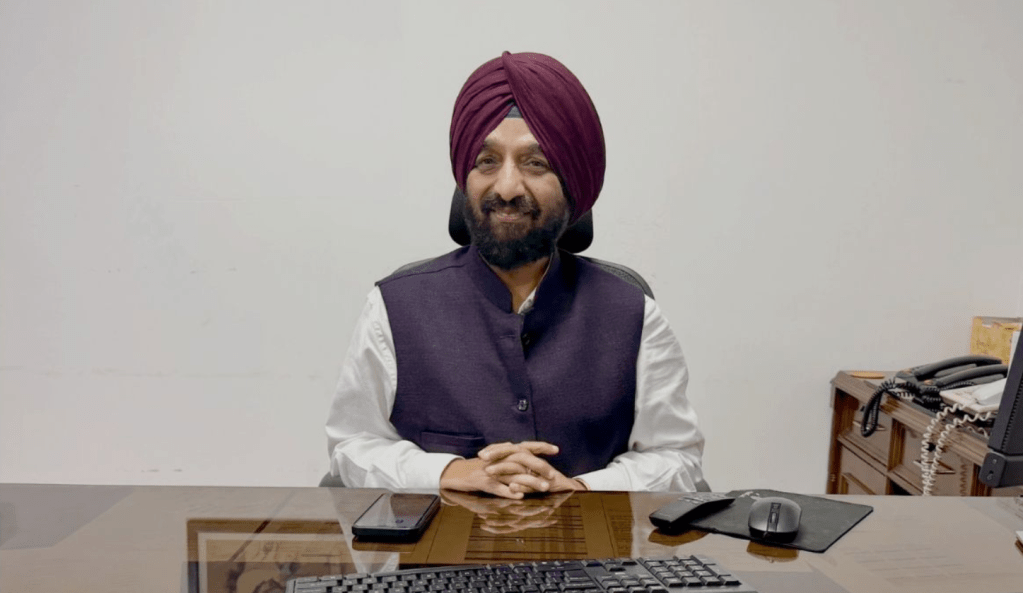
Sudeep Singh, Former Executive Director at the Food Corporation of India, spent decades answering that question through his actions rather than his words. His career offers a model of professional life that is almost entirely absent from the career inspiration content that dominates our current cultural conversation.
The Food Corporation of India is responsible for procuring food grain from farmers across the country, maintaining India’s strategic national food reserves, and distributing food through welfare programmes that reach hundreds of millions of the most vulnerable citizens. It is one of the largest and most complex food supply operations anywhere in the world.
When this system functions correctly, tens of millions of farmers receive fair and reliable income for their harvests. Hundreds of millions of families receive food they could not otherwise afford. The consequences of this system failing are immediate, real, and devastating for people who have no alternative safety net.
The first lesson young professionals can take from his career is a fundamental reexamination of what success is supposed to look like. We have built a professional culture that measures achievement almost entirely through visibility, and that equation is quietly distorting the career choices of an entire generation.
His most significant professional contributions were completely invisible to the general public and that invisibility was not a failure. It was the natural consequence of work that functioned so well it required no attention, which is the highest standard any professional in a critical public institution can actually achieve.
The second lesson is about the professional power of patience, which our current career culture has almost entirely abandoned in favour of speed and rapid visible progression. Food security in a country of 1.4 billion people is not built in a quarter or optimised in a sprint.
It is built over decades through the careful, unglamorous work of strengthening systems, developing people, improving processes, and making thousands of small decisions that compound over time into something the country can genuinely rely upon. Learning to think and work on that timescale is one of the rarest and most valuable qualities any professional can develop.
The third lesson is about integrity as a daily practice rather than a declared value. In an organisation managing public resources at the scale FCI operates, the temptation to allow small compromises to accumulate is constant, subtle, and enormously consequential for the real people whose lives depend on the system working honestly.
His tenure was consistently characterised by transparency, rigorous accountability, and disciplined adherence to proper process even when cutting corners would have been easier and probably unnoticed. That is not a minor administrative detail. It is the foundation on which trustworthy public institutions are actually built.
The fourth lesson concerns resilience and where it genuinely comes from. The COVID-19 pandemic placed extraordinary pressure on India’s food supply chain at precisely the moment when millions of people needed it most, and the professionals responsible for FCI‘s operations had to keep functioning under conditions that would have broken systems built on weaker foundations.
The resilience that allowed FCI to maintain food security through that period was not manufactured under pressure. It was the product of years of careful system building, disciplined process maintenance, and consistent investment in institutional strength during the quieter periods when that work attracted no attention and no applause.
The fifth lesson is about what genuine leadership actually produces over time. Most leadership advice currently available to young professionals focuses on personal impact, personal influence, and personal legacy, all of which are fundamentally self-referential ways of thinking about what leadership is for.
His approach at FCI reflected a completely different understanding. The goal was never to make himself indispensable. The goal was to build systems, develop people, and strengthen institutions that would continue functioning effectively and serving their purpose long after he had moved on.
For a generation of young professionals who are trying to build careers in India’s public and private sectors, his story offers something that startup success narratives and corporate achievement profiles almost never provide. It offers a concrete and real example of what it looks like to build a career around genuine service rather than personal advancement.
What young professionals in India can learn from Sudeep Singh‘s career at FCI is ultimately this: the most durable and meaningful professional lives are built not on visibility, speed, or personal recognition, but on the quiet daily practice of doing genuinely important work with complete integrity and in genuine service to people who depend on it. That standard is harder than it sounds and more valuable than our culture currently admits.
 Business Leaders
Leave a comment