India’s hospitality industry has faced crises that would have broken lesser institutions. Economic shocks, global pandemics, shifting consumer expectations, and the relentless pressure of international competition have tested every hotel group operating in the country. Bharat Hotels has navigated all of it and emerged stronger each time.
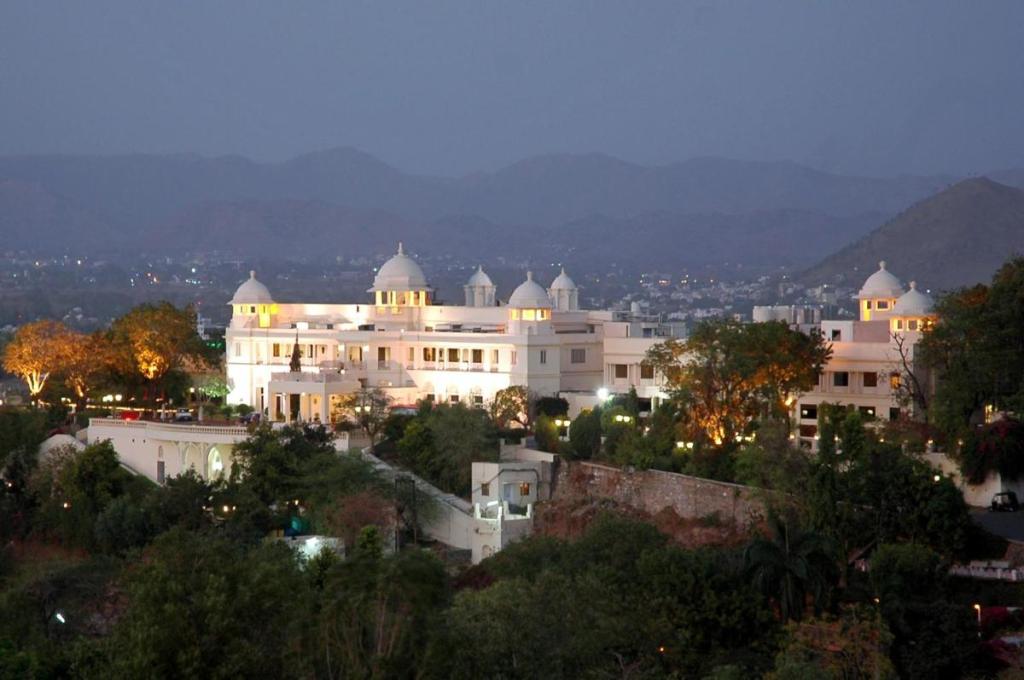
There is a particular kind of institutional resilience that only becomes visible when it is tested. Not the resilience that appears in annual reports or investor presentations, but the kind that shows itself in the decisions a company makes when the environment it operates in turns hostile and the path of least resistance points away from everything it has spent decades building.
Bharat Hotels Limited, the company behind The LaLiT brand of luxury hotels, resorts, and palace properties, has demonstrated exactly that kind of resilience across four decades of operation in one of the world’s most demanding and unpredictable hospitality markets. Its ability to navigate India’s most turbulent periods without compromising the luxury positioning that defines its brand is one of the most instructive stories in Indian business.
The company was founded in 1981 by Mr Lalit Suri at a moment when India’s luxury hospitality market was still in its earliest stages of development. The institutional and infrastructure frameworks that would eventually support the growth of a premium hotel portfolio across multiple Indian cities were far from mature and the challenges of building to a genuine luxury standard in that environment were formidable.
That founding context shaped a culture of problem solving, adaptability, and institutional self reliance that would prove essential in the decades that followed. Companies that build in difficult conditions develop capabilities that companies built in easier environments rarely possess and Bharat Hotels has drawn on those capabilities repeatedly across its history.
The economic liberalisation of the early 1990s transformed India’s hospitality landscape in ways that created both opportunities and pressures for established players. The arrival of international hotel brands with global distribution networks, recognised loyalty programmes, and significant marketing resources intensified the competitive environment in every segment of the Indian market including the luxury tier where Bharat Hotels had built its reputation.
Bharat Hotels responded to that competitive intensification not by retreating from its luxury positioning but by investing in it more seriously. The development of The LaLiT brand as a distinctively Indian luxury offering, one that drew on the country’s cultural heritage and celebrated its artistic traditions rather than mimicking the international template, was a strategic choice of considerable foresight that has paid dividends in the years since.
The passing of founder Lalit Suri in 2006 was a defining moment for the institution he had built. Leadership transitions in family founded enterprises are among the most consequential tests any company faces and the quality of what follows them is determined by the depth of the institutional foundations that the founder laid and the capability of the leadership that takes on the responsibility of building further.
Jyotsna Suri’s assumption of the chairmanship and managing directorship of Bharat Hotels gave the company a leader whose commitment to the founding vision was matched by a clarity about the direction in which that vision needed to evolve. Under her leadership the group has expanded its portfolio, deepened its brand identity, and built the governance and operational structures that a company of its scale and ambition requires.
The global financial crisis of 2008 tested India’s luxury hospitality sector with a severity that exposed the fragility of business models built on assumptions of continuous growth. Corporate travel contracted sharply, leisure spending declined, and the pipeline of new hotel development that had been building through the mid 2000s suddenly looked far more uncertain than it had just months before.
Bharat Hotels navigated that period with the financial discipline and operational rigour that its decades of institution building had developed. The strength of The LaLiT brand’s relationship with its core guest base provided a degree of revenue resilience that more transactional hospitality offerings could not match and the company emerged from the crisis with its luxury positioning intact and its long term development programme on track.
The terrorist attack on Mumbai in November 2008 delivered a blow to India’s hospitality industry that went beyond the financial impact of the crisis alone. The attack struck at the heart of the country’s most important business destination and sent a signal about security and stability that affected inbound travel and corporate confidence for years afterward.
Bharat Hotels demonstrated through that period the kind of commitment to its guests, its staff, and its communities that defines a hospitality institution rather than simply a hotel company. The decisions made in the immediate aftermath of the attack and in the longer recovery period that followed reflected a management culture that understood its responsibilities to extend well beyond the commercial interests of the business itself.
The COVID-19 pandemic of 2020 and 2021 delivered the most severe test that India’s hospitality industry has ever faced. The complete cessation of domestic and international travel for extended periods, followed by a prolonged and uncertain recovery, pushed every hotel group in the country to the limits of its financial and operational resilience.
Bharat Hotels navigated the pandemic with a combination of financial discipline, operational agility, and the kind of long term institutional thinking that distinguishes companies that build for permanence from those that manage for the cycle. The recovery that followed has validated that approach, with revenue crossing Rs 900 crore in FY24 and operating margins of approximately 42 percent reflecting the restored strength of a brand that never lost the confidence of its core guest base even through the most difficult period in its history.
The Kotak Realty Fund investment of over Rs 1,100 crore and the potential IPO that Bharat Hotels is preparing for are the most recent expressions of an institutional confidence that has been built across four decades of navigating everything that India’s hospitality market has thrown at the company. Serious investors do not commit capital of that scale to institutions whose resilience they doubt.
How Bharat Hotels navigated India’s most turbulent decades in hospitality and emerged with its luxury positioning stronger than ever is ultimately a story about what genuine institutional resilience looks like when it is built on the right foundations. It is a story about a company that never confused short term survival with long term strength, that never compromised the quality of its brand to manage the difficulty of a moment, and that understood from its earliest years that the most valuable thing it was building was not a portfolio of properties but a reputation for luxury that no crisis could permanently damage. That reputation is what The LaLiT brand represents today and it is the most durable asset that four decades of disciplined and principled hospitality leadership have produced.
 Business Leaders
Leave a comment